Site & surrounding uses
Project layout, setbacks, access, screening, drainage, nearby uses and construction activity.

PROPERTY OWNERS / COMMUNITIES / LOCAL REVIEWERS
A solar garden or battery project starts with a good fit: the property, the grid and the community. Explore the options and what it takes to move from an initial conversation to a thoughtfully developed project.
Discuss your property ↗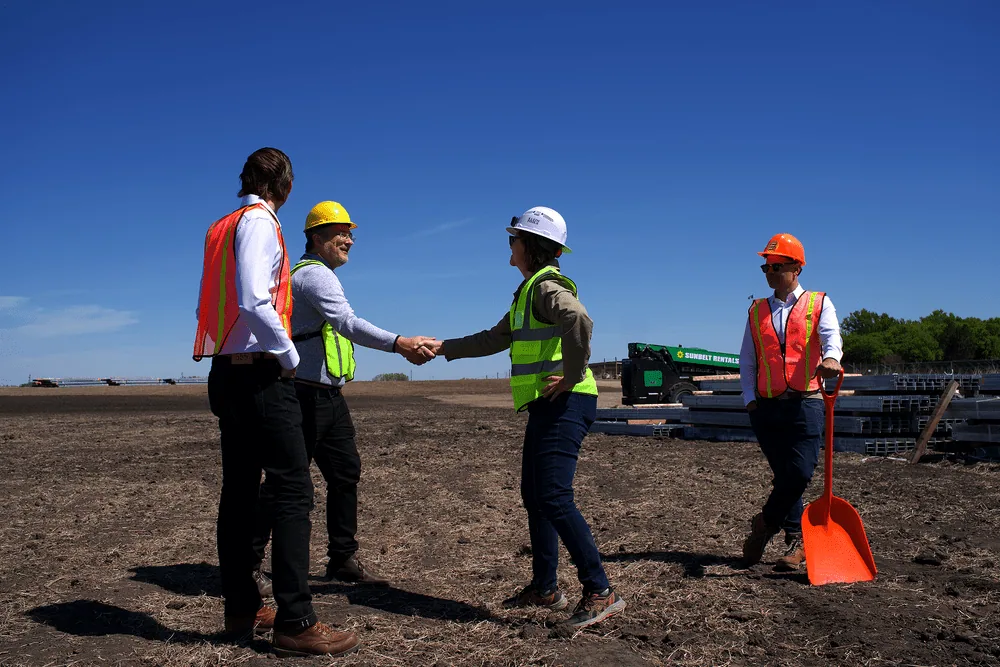
A RELATIONSHIP, NOT JUST A SITE
Whether you’re considering a long-term lease, a property sale or simply exploring an idea, we’ll help you understand the development opportunity and the questions that need answers.
Site suitability, utility capacity and local approvals shape what’s possible. An initial conversation does not guarantee a project or a particular return.
Explore both technologies ↓02 / WHAT TO EXPECT
Share the location, approximate acreage, current use and your goals. We begin with an initial fit assessment.
Evaluate land, access, grid feasibility and local requirements. Discuss proposed lease or purchase terms and development milestones.
Develop a site plan and coordinate utility and local reviews. Respond to questions from reviewers and the community.
If approvals, financing and other requirements are met, plan construction, ongoing access, maintenance and eventual decommissioning.
The order and timing of these activities vary. Development may take time, and not every evaluated property moves forward.
03 / LOCAL AUTHORITIES & COMMUNITY REVIEW
For planning staff, elected officials, fire personnel and other authorities having jurisdiction: these are the topics to work through together, with documentation appropriate to the site and equipment.
Project layout, setbacks, access, screening, drainage, nearby uses and construction activity.
Technology specifications, applicable requirements, monitoring, protective systems and emergency-response coordination.
Maintenance responsibilities, contact information, site access and decommissioning or restoration provisions.
LET’S START WITH THE PROPERTY
Send the property location, approximate acreage and whether you’re interested in solar, batteries or both.
Start a conversation ↗